Specialist ventilation wholesaler Luftbude was growing and growing, but its data was stuck in an Excel jungle. Decisions were often based on gut feeling and outdated reporting. That’s exactly what we changed: By setting up a central data lake and automated Python pipelines, we linked sales, purchasing and marketing into a “single source of truth”. The result is a business intelligence solution that turns the entire corporate management system on its head.
Client
Industry
Time Frame
Team
Tools
Collab
Manual reporting effort
Transparency about real margins
Data sources combined
Many entrepreneurs are familiar with this: the company is growing – but the overview is dwindling. At Luftbude’s online store, the reporting landscape consisted of a historically grown proliferation of manual Excel files. The data from the store, CRM, purchasing and web analytics was stored in silos. By the time a report was ready, it was out of date.
The big problem: looking at turnover did not show the actual profitability. Without linking purchasing data, returns and working hours, it remained unclear which deals were really making money and which were burning money. The goal was clear: to move away from manual chaos and towards a reliable, automated database.
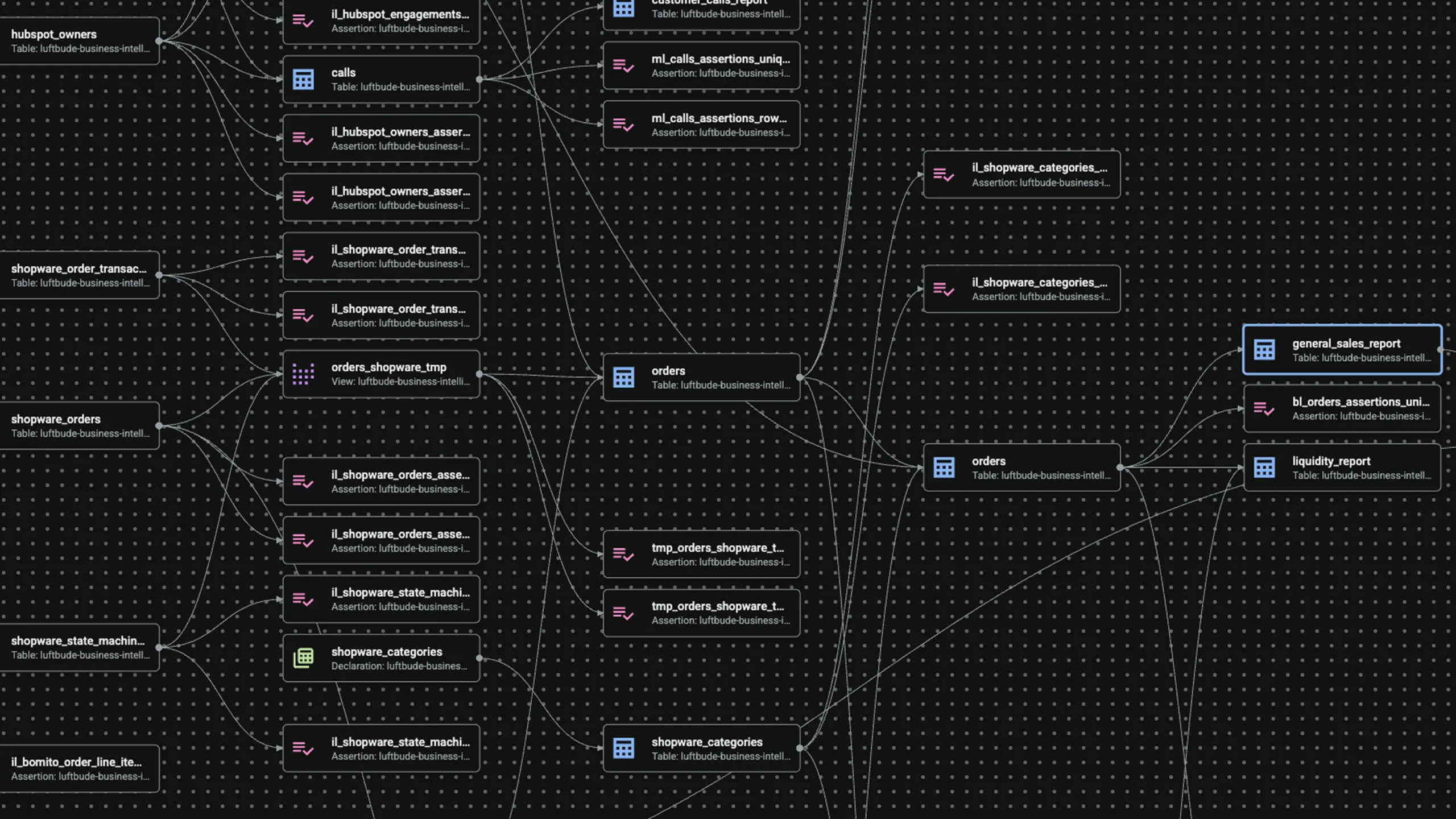
Complex n8n workflow automates data exchange between different systems in real time.
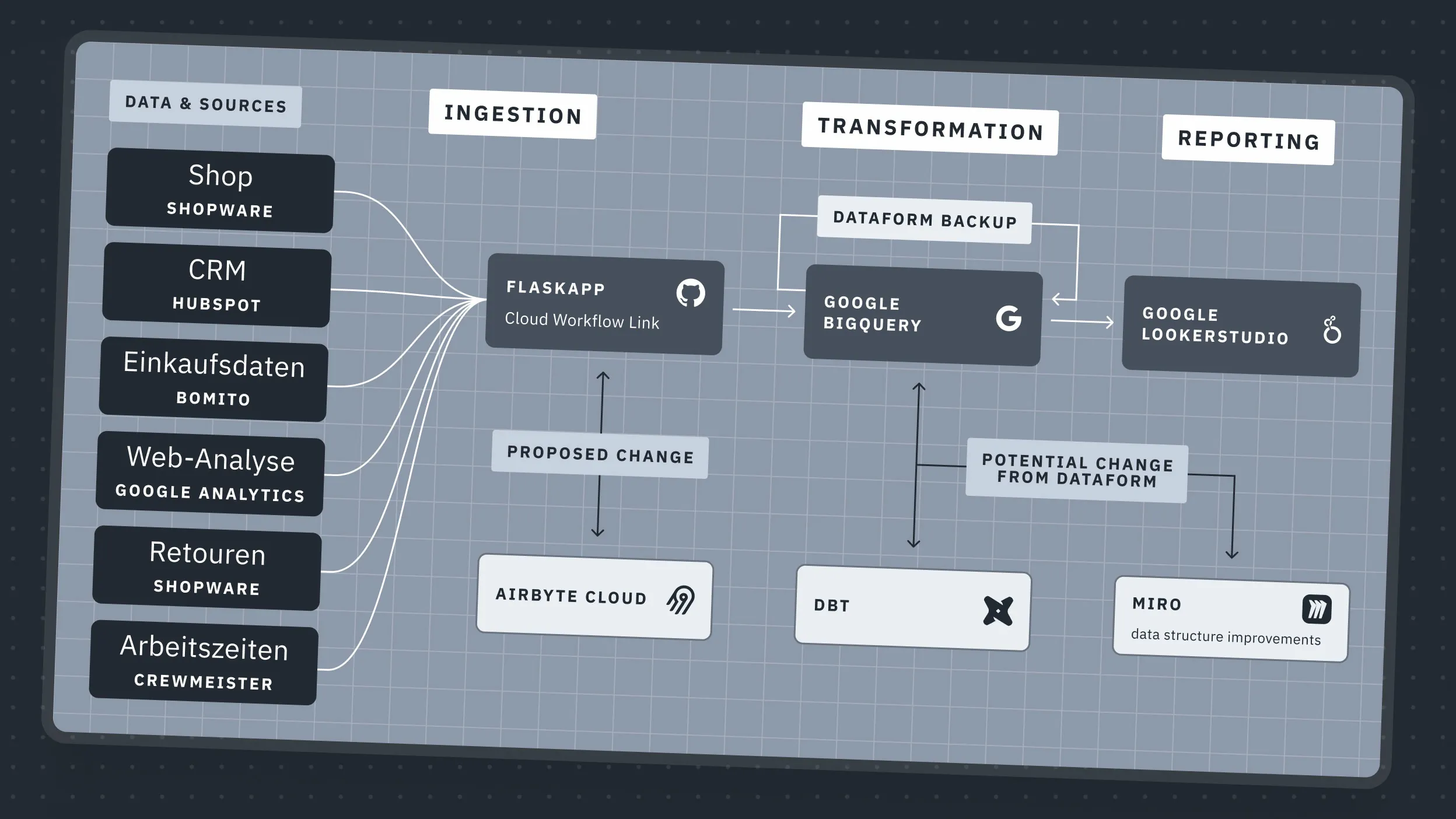
Schematic representation of an ETL data pipeline integrating various system sources into a central dashboard.
We started with a proof-of-concept in n8n to validate our hypotheses. For scaling, we switched to customized Python pipelines in Google Cloud. We tapped into all relevant veins – Shopware for orders, HubSpot for sales pipelines, GA4 for user behavior and even the phone system for operational signals.
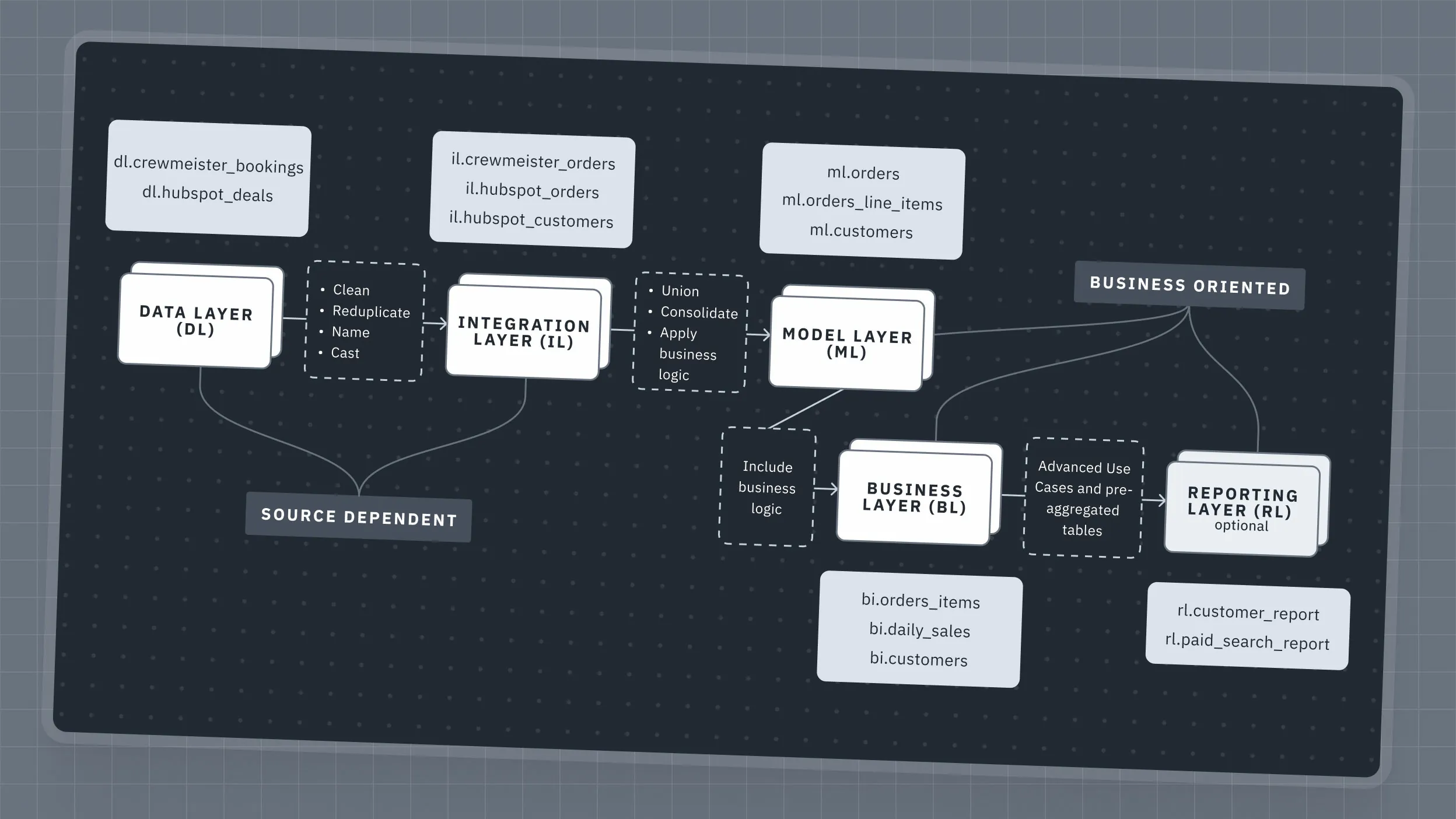
We brought these data worlds together in a central data lake (Google BigQuery). The decisive strategic lever was normalization: we defined logics that offset sales with purchase prices and working hours. This resulted in an architecture that independently intercepts errors and automatically collects and refines data.
Structured layer model plans the modern data architecture from the raw data source to reporting.
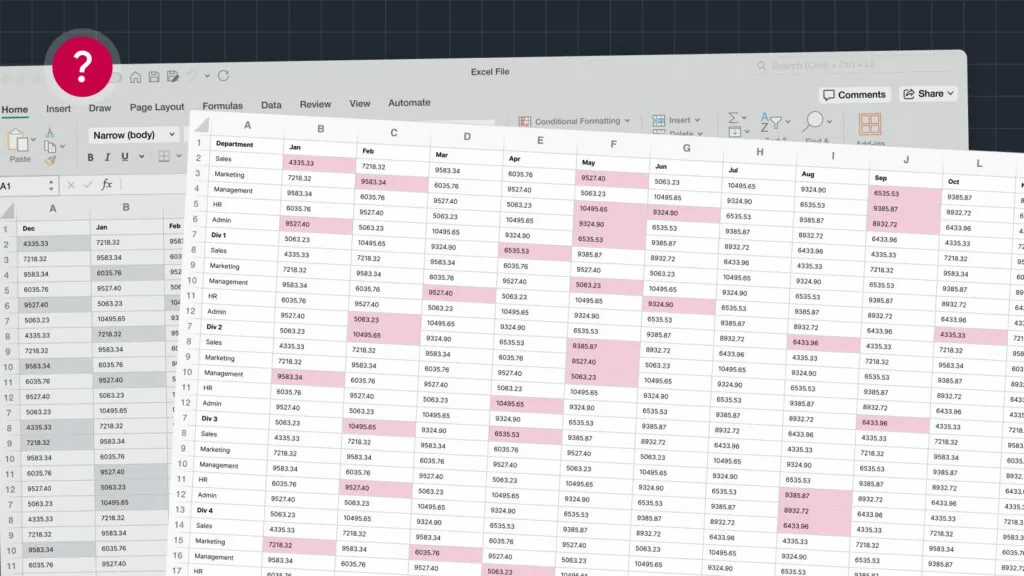
The Excel table below symbolizes the status quo of many companies before our data transformation.
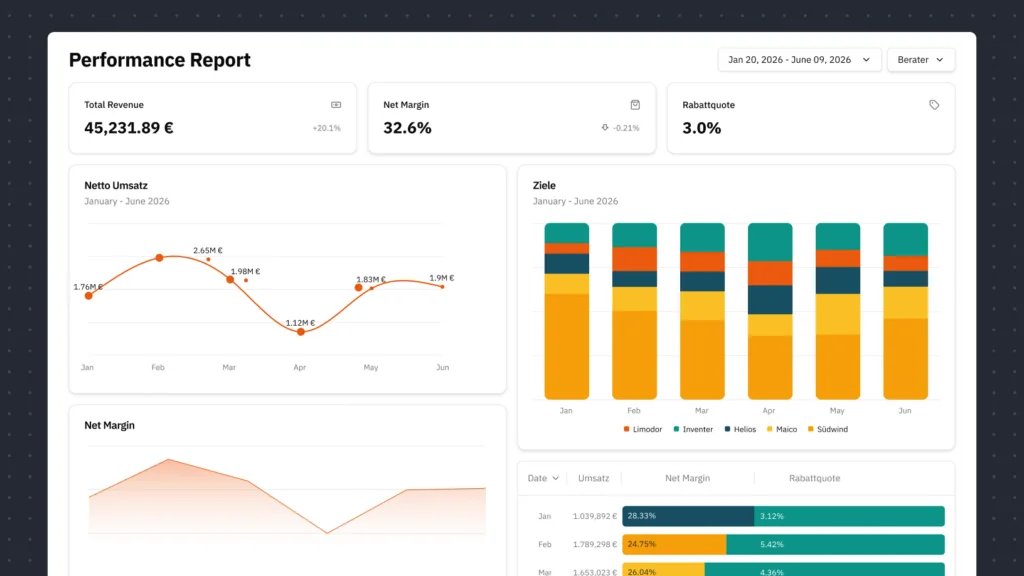
Exemplary performance dashboard demonstrates the clarity we gain from complex data sets.
"Data is only valuable when it hurts or makes you cheer. We didn't just visualize figures, we linked the purchasing and sales data. Suddenly Luftbude can see where they're really making money - and where it's just trickling away."—Christopher Carus (CTO)
Today, Luftbude no longer acts on instinct, but on data. In Looker Studio, the management looks at dashboards that update themselves. The system exposes unprofitable products and identifies the true sales drivers.
Sales staff now see their performance based on contribution margins, no longer just on turnover – a massive incentive to act profitably. VIP customers are recognized early on and consulting capacities are distributed more efficiently. Data transparency has created a new corporate culture in which profitability comes before volume.
And you thought that was it, didn’t you?
Discuss your next project with Christopher
Christopher has algorithms in his blood and loves to dance the firefox trot